











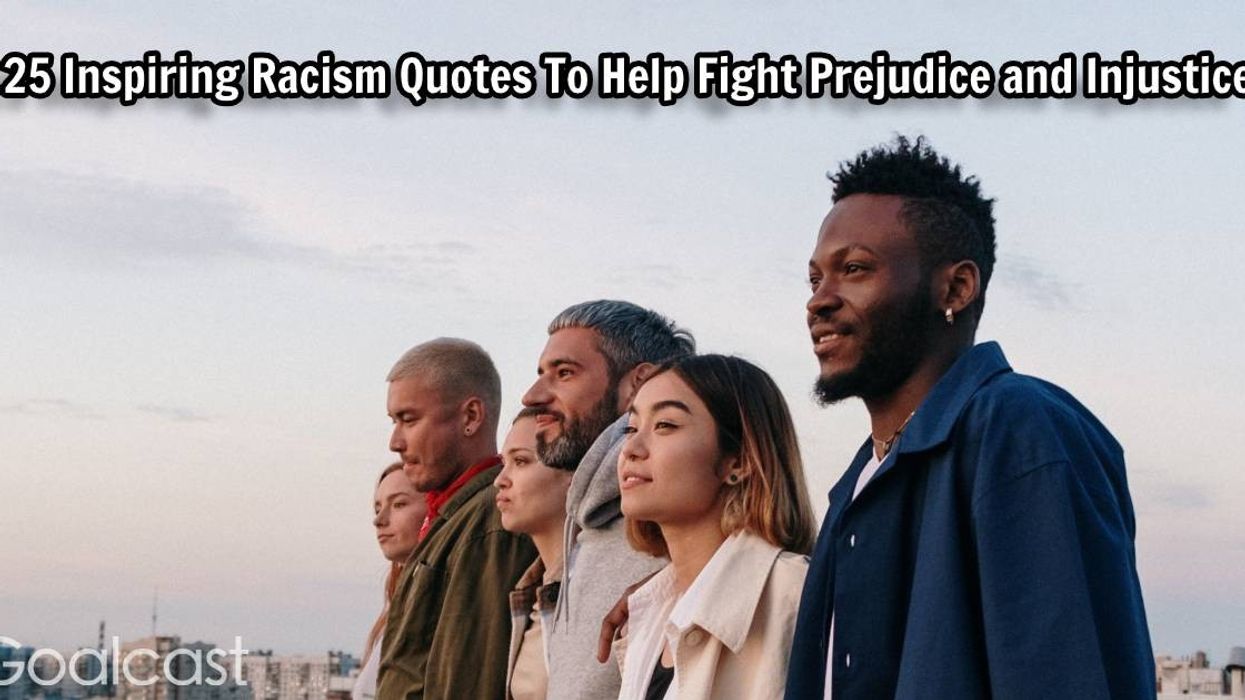









A community is so much more than people sharing a space. It's a living, breathing network of connections and shared experiences. While it's usually defined as “a group of people living in the same place or having a particular characteristic in common,” true community runs much deeper than that.
Diversity
It doesn’t matter how different we are. What matters in building a community is the desire to live in a peaceful and caring environment, despite all our differences.Good Neighbors
Good Neighbors
When searching for a new place to call home, we hope to stumble upon neighbors who can transform a neighborhood into something meaningful. We all need to be surrounded by people who genuinely care for the well-being of others. Only this type of people can create a community that is more than just a bunch of individuals living next to each other.
It Starts with One
Building a strong community starts with individual contributions, no matter how small. As long as you are kind and willing to help others in need, you’ll be a great community member. In exchange, your community will give you a sense of belonging and the feeling that you are never alone.
Here are 35 quotes on what makes communities special — community service, coming together, engagement, involvement, and support
Quotes about community coming together
One of the marvelous things about community is that it enables us to welcome and help people in a way we couldn't as individuals.
JEAN VANIER
There is no power for change greater than a community discovering what it cares about.
MARGARET J. WHEATLEY
We cannot live only for ourselves. A thousand fibers connect us with our fellow men.
HERMAN MELVILLE
There is immense power when a group of people with similar interests gets together to work toward the same goals.
IDOWU KOYENIKAN
Our generation has the ability and the responsibility to make our ever-more connected world a more hopeful, stable and peaceful place.
NATALIE PORTMAN
Quotes about building community
We were born to unite with our fellow men, and to join in community with the human race.
CICERO
Some people think they are in community, but they are only in proximity. True community requires commitment and openness. It is a willingness to extend yourself to encounter and know the other.
DAVID SPANGLER
What should young people do with their lives today? Many things, obviously. But the most daring thing is to create stable communities in which the terrible disease of loneliness can be cured.
KURT VONNEGUT
We have all known the long loneliness and we have learned that the only solution is love and that love comes with community.
DOROTHY DAY
The minute we become an integrated whole, we look through the same eyes and we see a whole different world together.
AZIZAH AL-HIBRI
This world of ours… must avoid becoming a community of dreadful fear and hate, and be, instead, a proud confederation of mutual trust and respect.
DWIGHT D. EISENHOWER
Every person is defined by the communities she belongs to.
ORSON SCOTT CARD
Quotes about community service, engagement, and involvement
Service to others is the rent you pay for your room here on Earth.
MUHAMMAD ALI
The best way to find yourself is to lose yourself in the service of others.
MAHATMA GANDHI
Life’s most persistent and urgent question is, ‘What are you doing for others?’
MARTIN LUTHER KING, JR.
I am of the opinion that my life belongs to the whole community and as long as I live, it is my privilege to do for it whatever I can. I want to be thoroughly used up when I die, for the harder I work the more I live.
GEORGE BERNARD SHAW
Teaching kids how to feed themselves and how to live in a community responsibly is the center of an education.
ALICE WATERS
Volunteers don’t get paid, not because they’re worthless, but because they’re priceless.
SHERRY ANDERSON
Too often we underestimate the power of a touch, a smile, a kind word, a listening ear, an honest compliment, or the smallest act of caring, all of which have the potential to turn a life around.
LEO BUSCAGLIA
How wonderful it is that nobody need wait a single moment before starting to improve the world.
ANNE FRANK
Unless someone like you cares a whole awful lot, nothing is going to get better. It’s not.
DR. SEUSS
The smallest act of kindness is worth more than the grandest intention.
OSCAR WILDE
I’ve learned that people will forget what you said, people will forget what you did, but people will never forget how you made them feel.
MAYA ANGELOU
Ask not what your country can do for you, but what you can do for your country.
JOHN F. KENNEDY
Quotes about community support
In every community, there is work to be done. In every nation, there are wounds to heal. In every heart, there is the power to do it.
MARIANNE WILLIAMSON
The greatness of a community is most accurately measured by the compassionate actions of its members.
CORETTA SCOTT KING
The world is so empty if one thinks only of mountains, rivers & cities; but to know someone who thinks & feels with us, & who, though distant, is close to us in spirit, this makes the earth for us an inhabited garden.
JOHANN WOLFGANG VON GOETHE
Diversity is about all of us, and about us having to figure out how to walk through this world together.
JACQUELINE WOODSON
One of the most important things you can do on this earth is to let people know they are not alone.
SHANNON L. ALDER
No man can become rich without himself enriching others.
ANDREW CARNEGIE
Quotes about community health
The power of community to create health is far greater than any physician, clinic or hospital.
MARK HYMAN
For a community to be whole and healthy, it must be based on people’s love and concern for each other.
MILLARD FULLER
Communities and countries and ultimately the world are only as strong as the health of their women.
MICHELLE OBAMA
When elected officials abandon our environment and ruin our natural resources, public health is endangered. I know the importance of providing a clean environment for our children.
GWEN MOORE
And I believe that the best buy in public health today must be a combination of regular physical exercise and a healthy diet.
JULIE BISHOP
These quotes remind us of the joy of being part of something bigger than ourselves.
The 3 P's: Why Travel Matters for Your Personal Growth
A few weeks ago I sat down in a busy coffee shop, cracked open my laptop, and decided to Google “Most underrated places worth visiting.” To my surprise, Granada, Nicaragua came up twice. Images of the Spanish colonial-style buildings, awash in orange clay and pale yellows, were all I needed to figure out the next place to have my passport stamped. The oldest city in Central America seemed to be calling my name.
The most common question asked when I shared the news of my impromptu adventure was, “Why?” Some friends seemed dumbfounded, while others were unsettled by my decision to visit the second poorest country in the western hemisphere. I received the same suspicious glances when I set out to see Haiti, Nepal, and a small village in South Africa. Still, I took their misgivings in stride, convinced each corner of the globe offered worthwhile experiences and lessons to be learned.
Whether you decide to see the Roman Pantheon, the Great Wall of China, or venture just beyond your zip code, traveling matters a great deal for your personal growth. And as far as I can see there are three main reasons why -- I call them "the three P's."
The 3 P's: Why Travel Matters for Your Personal Growth
1. People
Four days into my trip I met up with the uncle of a friend back in California. After a quick breakfast in downtown Granada, I returned to find an older gentleman milling around the front of the house I was staying at. He stood about 5"6', sported a thick flannel shirt, and proudly wore a bright red hat with the Canadian maple leaf sprawled across the crown. “I’m Raymundo,” he said before offering a hug.
Minutes later, he whisked me away to a small beach town called El Transito -- the kind of place you hear about, where making it hinges on navigating choppy back roads and being able to forfeit fluffy towels and mints on your pillow. El Transito is so remote that many of the locals in Granada have never even heard of it.
But during our time together I learned a great deal about the man I’d eventually refer to as “Uncle Ray.” He regaled me with stories of his childhood in Managua, raising two boys, and the highs and lows of being a pediatrician in a country with a wildly imperfect health care system. We talked sports, politics, and all the places we’d visited between us. Each time I took at peek at the driver’s seat Raymundo was beaming, as it dawned on me in our two hours together I’d never seen the man not smile.
Soon enough we were sitting in a cozy little hideaway watching the waves rise and fall off in the distance as a hot plate of fish and chips sat in front of us. We talked in between bites as I looked off to see a few patches of ominous-looking clouds racing towards us. “I think it’s going to rain,” I told him. Uncle Ray just smiled and took another carefree sip of his beer. This guy’s got it all figured out, I thought.
After an email or two I’d met a person from another country with a unique view of the world. My journey had allowed me to challenge the assumptions I held about a community and its people. And through our connection, my life had become enlightened and far richer.
2. Patience
Years ago, I paid homage to the land my great-grandfather left for America: Sicily. While thumbing through a Lonely Planet guidebook one hot afternoon, I searched for a bus to take me to a beach just outside of Syracuse.
For nearly 30 minutes I watched my driver-to-be argue with a man I gathered was known in town for stirring up a little trouble. I was hot, tired, and after a long train ride anxious to soak my feet in the Ionian Sea. But after a few minutes a strange thing began to happen -- my frustration gave way to a sense of peace. I realized there was nothing I could do about this frustrating, and in hindsight, rather comical episode.
I’d experienced similar tests before in various parts of the world. Whether waiting for the power to be turned back on in Nepal, water to be restored in South Africa, or for a seemingly unending security check to move along at the Bosnia-Herzegovina border, each incident tried my patience in unique ways. Ultimately, I was nudged to consider the world didn’t work on my time line. I learned to stop prioritizing the urgent over the important and started to look beyond my own needs.
3. Perspective
After Granada, I traveled to a popular tourist destination on Nicaragua’s southwest coast. On the way my bus weaved through narrow roads, hugging the vibrant and lush countryside of this Central American gem. It was one of the most beautiful rides I could remember.
But as soon as I’d set my bag down in my hostel in San Juan del Sur, I found myself planted in front of my laptop, an all-too-familiar place. I sat impatiently waiting for the spotty WiFi to connect me to the world I was trying to unplug from. I griped and grumbled as the waves of the Pacific Ocean rose and fell literally 100 feet from my room.
Fortunately, I collected myself long enough to consider the scooter ride I’d taken the day before in Granada, and the depths of poverty I’d casually rode past. I was complaining about email when 24 hours before I saw children wearing tattered clothes and covered in dirt. I was reminded that someone somewhere will always be facing greater challenges than me, and though travel may not be an antidote to the world’s problems, it can offer a dose of perspective. When our awareness is heightened, our ambivalence begins to gradually erode. And through greater consciousness, we can find ways to lend a hand, however big or small.
So wherever you choose to venture off to, remember to protect your curiosity, to be bold but not reckless, and flexible enough in your thinking to reap the treasures this remarkable world has to offer.