












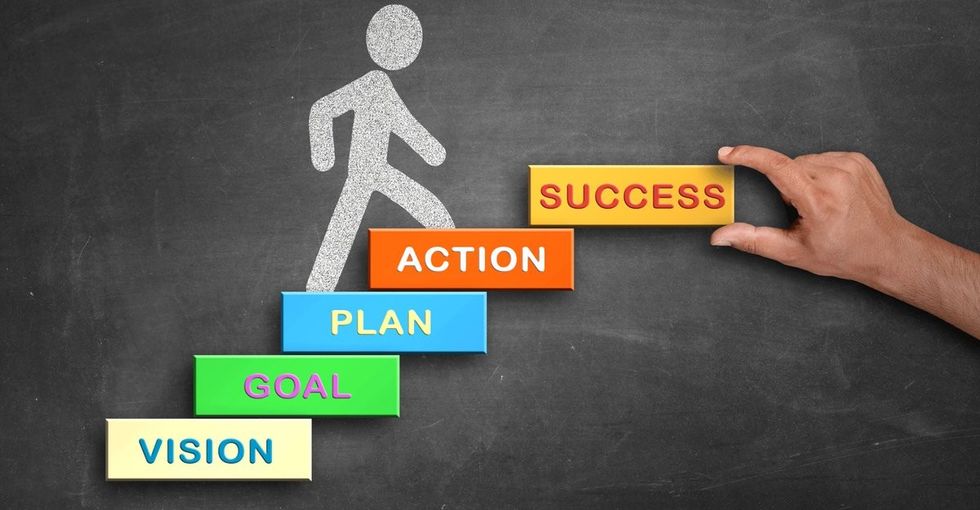
 Man working his way up






A community is so much more than people sharing a space. It's a living, breathing network of connections and shared experiences. While it's usually defined as “a group of people living in the same place or having a particular characteristic in common,” true community runs much deeper than that.
Diversity
It doesn’t matter how different we are. What matters in building a community is the desire to live in a peaceful and caring environment, despite all our differences.Good Neighbors
Good Neighbors
When searching for a new place to call home, we hope to stumble upon neighbors who can transform a neighborhood into something meaningful. We all need to be surrounded by people who genuinely care for the well-being of others. Only this type of people can create a community that is more than just a bunch of individuals living next to each other.
It Starts with One
Building a strong community starts with individual contributions, no matter how small. As long as you are kind and willing to help others in need, you’ll be a great community member. In exchange, your community will give you a sense of belonging and the feeling that you are never alone.
Here are 35 quotes on what makes communities special — community service, coming together, engagement, involvement, and support
Quotes about community coming together
One of the marvelous things about community is that it enables us to welcome and help people in a way we couldn't as individuals.
JEAN VANIER
There is no power for change greater than a community discovering what it cares about.
MARGARET J. WHEATLEY
We cannot live only for ourselves. A thousand fibers connect us with our fellow men.
HERMAN MELVILLE
There is immense power when a group of people with similar interests gets together to work toward the same goals.
IDOWU KOYENIKAN
Our generation has the ability and the responsibility to make our ever-more connected world a more hopeful, stable and peaceful place.
NATALIE PORTMAN
Quotes about building community
We were born to unite with our fellow men, and to join in community with the human race.
CICERO
Some people think they are in community, but they are only in proximity. True community requires commitment and openness. It is a willingness to extend yourself to encounter and know the other.
DAVID SPANGLER
What should young people do with their lives today? Many things, obviously. But the most daring thing is to create stable communities in which the terrible disease of loneliness can be cured.
KURT VONNEGUT
We have all known the long loneliness and we have learned that the only solution is love and that love comes with community.
DOROTHY DAY
The minute we become an integrated whole, we look through the same eyes and we see a whole different world together.
AZIZAH AL-HIBRI
This world of ours… must avoid becoming a community of dreadful fear and hate, and be, instead, a proud confederation of mutual trust and respect.
DWIGHT D. EISENHOWER
Every person is defined by the communities she belongs to.
ORSON SCOTT CARD
Quotes about community service, engagement, and involvement
Service to others is the rent you pay for your room here on Earth.
MUHAMMAD ALI
The best way to find yourself is to lose yourself in the service of others.
MAHATMA GANDHI
Life’s most persistent and urgent question is, ‘What are you doing for others?’
MARTIN LUTHER KING, JR.
I am of the opinion that my life belongs to the whole community and as long as I live, it is my privilege to do for it whatever I can. I want to be thoroughly used up when I die, for the harder I work the more I live.
GEORGE BERNARD SHAW
Teaching kids how to feed themselves and how to live in a community responsibly is the center of an education.
ALICE WATERS
Volunteers don’t get paid, not because they’re worthless, but because they’re priceless.
SHERRY ANDERSON
Too often we underestimate the power of a touch, a smile, a kind word, a listening ear, an honest compliment, or the smallest act of caring, all of which have the potential to turn a life around.
LEO BUSCAGLIA
How wonderful it is that nobody need wait a single moment before starting to improve the world.
ANNE FRANK
Unless someone like you cares a whole awful lot, nothing is going to get better. It’s not.
DR. SEUSS
The smallest act of kindness is worth more than the grandest intention.
OSCAR WILDE
I’ve learned that people will forget what you said, people will forget what you did, but people will never forget how you made them feel.
MAYA ANGELOU
Ask not what your country can do for you, but what you can do for your country.
JOHN F. KENNEDY
Quotes about community support
In every community, there is work to be done. In every nation, there are wounds to heal. In every heart, there is the power to do it.
MARIANNE WILLIAMSON
The greatness of a community is most accurately measured by the compassionate actions of its members.
CORETTA SCOTT KING
The world is so empty if one thinks only of mountains, rivers & cities; but to know someone who thinks & feels with us, & who, though distant, is close to us in spirit, this makes the earth for us an inhabited garden.
JOHANN WOLFGANG VON GOETHE
Diversity is about all of us, and about us having to figure out how to walk through this world together.
JACQUELINE WOODSON
One of the most important things you can do on this earth is to let people know they are not alone.
SHANNON L. ALDER
No man can become rich without himself enriching others.
ANDREW CARNEGIE
Quotes about community health
The power of community to create health is far greater than any physician, clinic or hospital.
MARK HYMAN
For a community to be whole and healthy, it must be based on people’s love and concern for each other.
MILLARD FULLER
Communities and countries and ultimately the world are only as strong as the health of their women.
MICHELLE OBAMA
When elected officials abandon our environment and ruin our natural resources, public health is endangered. I know the importance of providing a clean environment for our children.
GWEN MOORE
And I believe that the best buy in public health today must be a combination of regular physical exercise and a healthy diet.
JULIE BISHOP
These quotes remind us of the joy of being part of something bigger than ourselves.